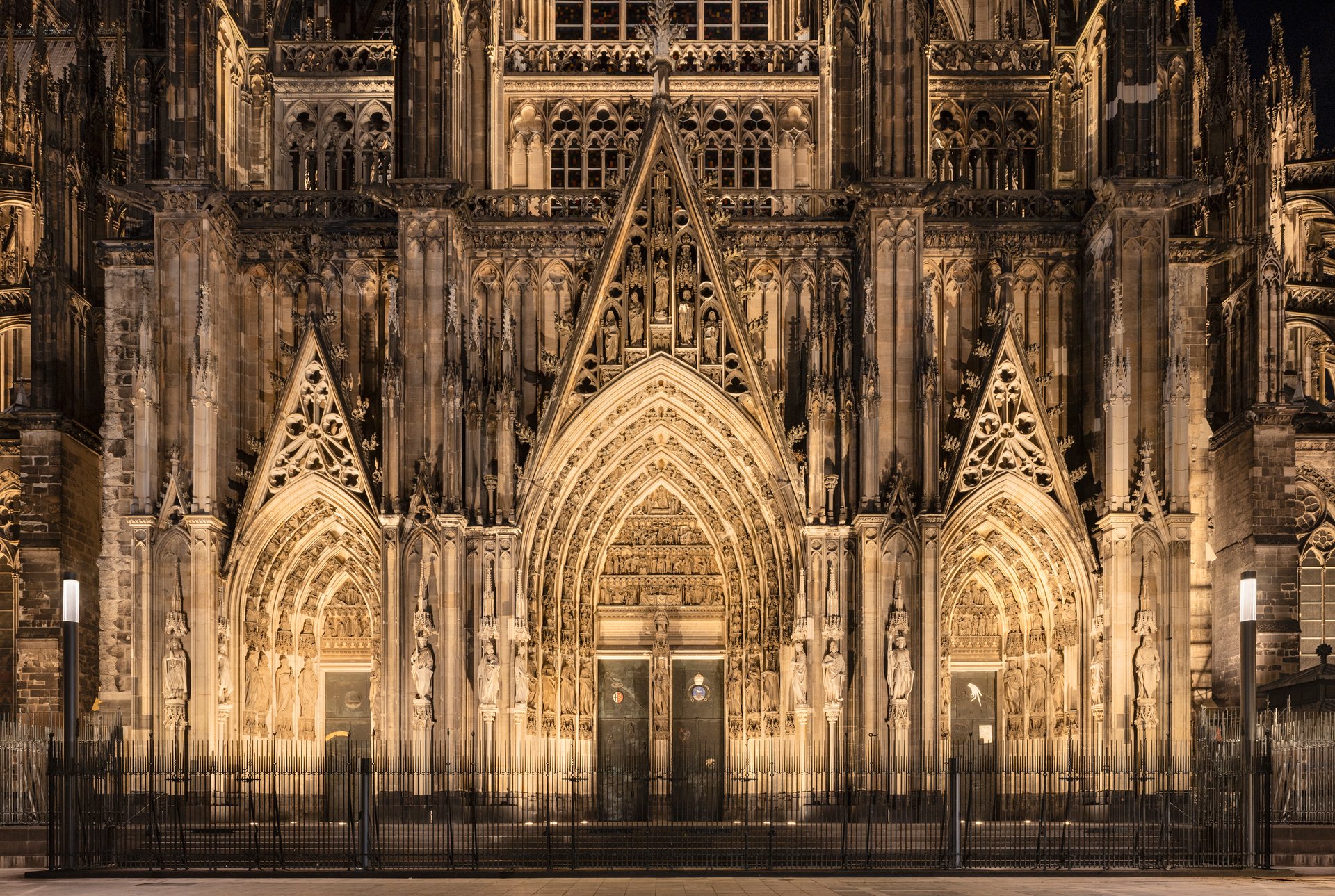
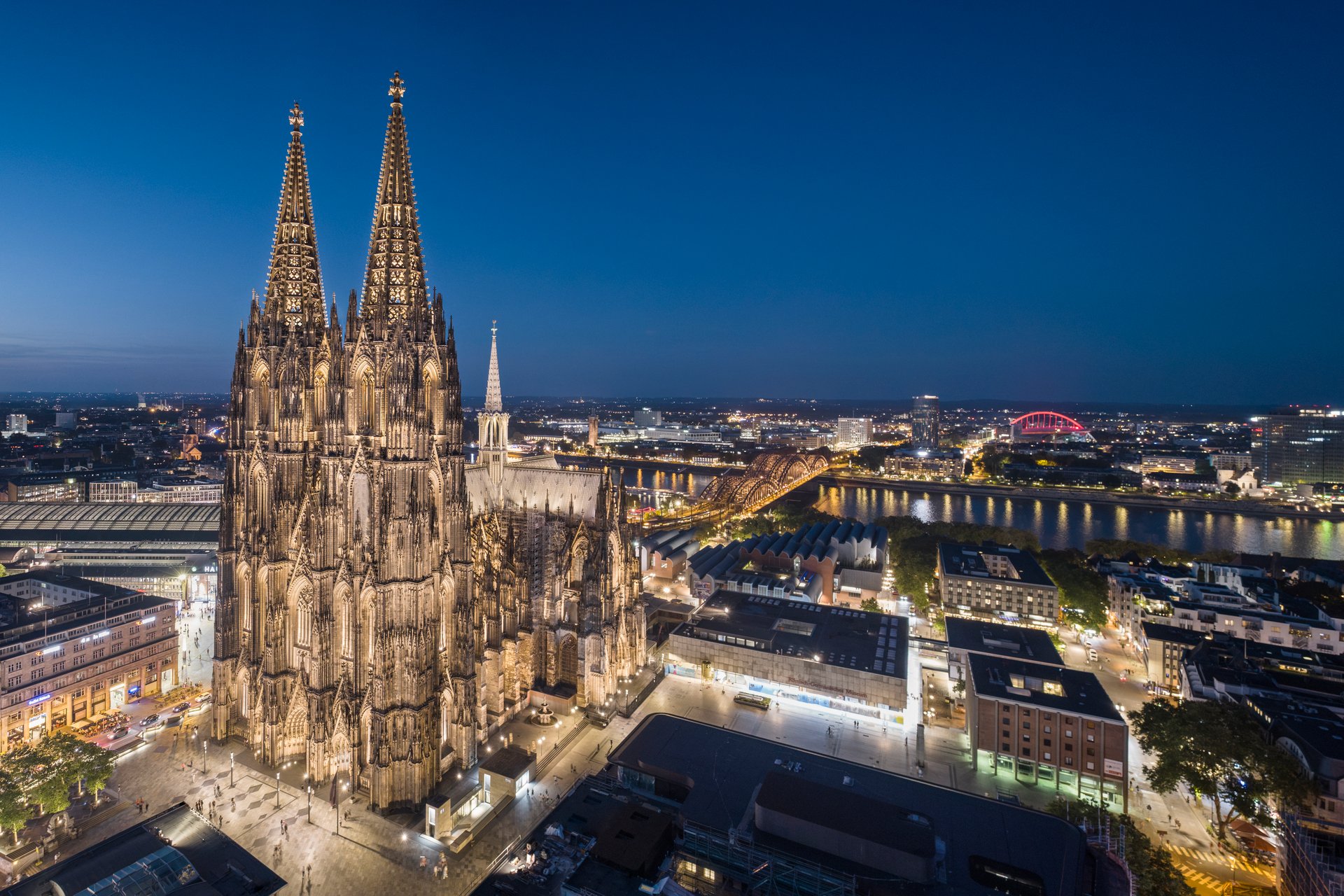
Impressive night-time image for a UNESCO World Heritage Site
The new exterior lighting for Cologne Cathedral combines technically sophisticated lighting design with ecological responsibility. In close cooperation with the Cathedral Guild, RheinEnergie and WE-EF, the lighting design office Licht Kunst Licht has developed a lighting system consisting of over 700 discreet and inconspicuously integrated luminaires that significantly reduce energy consumption and light pollution.
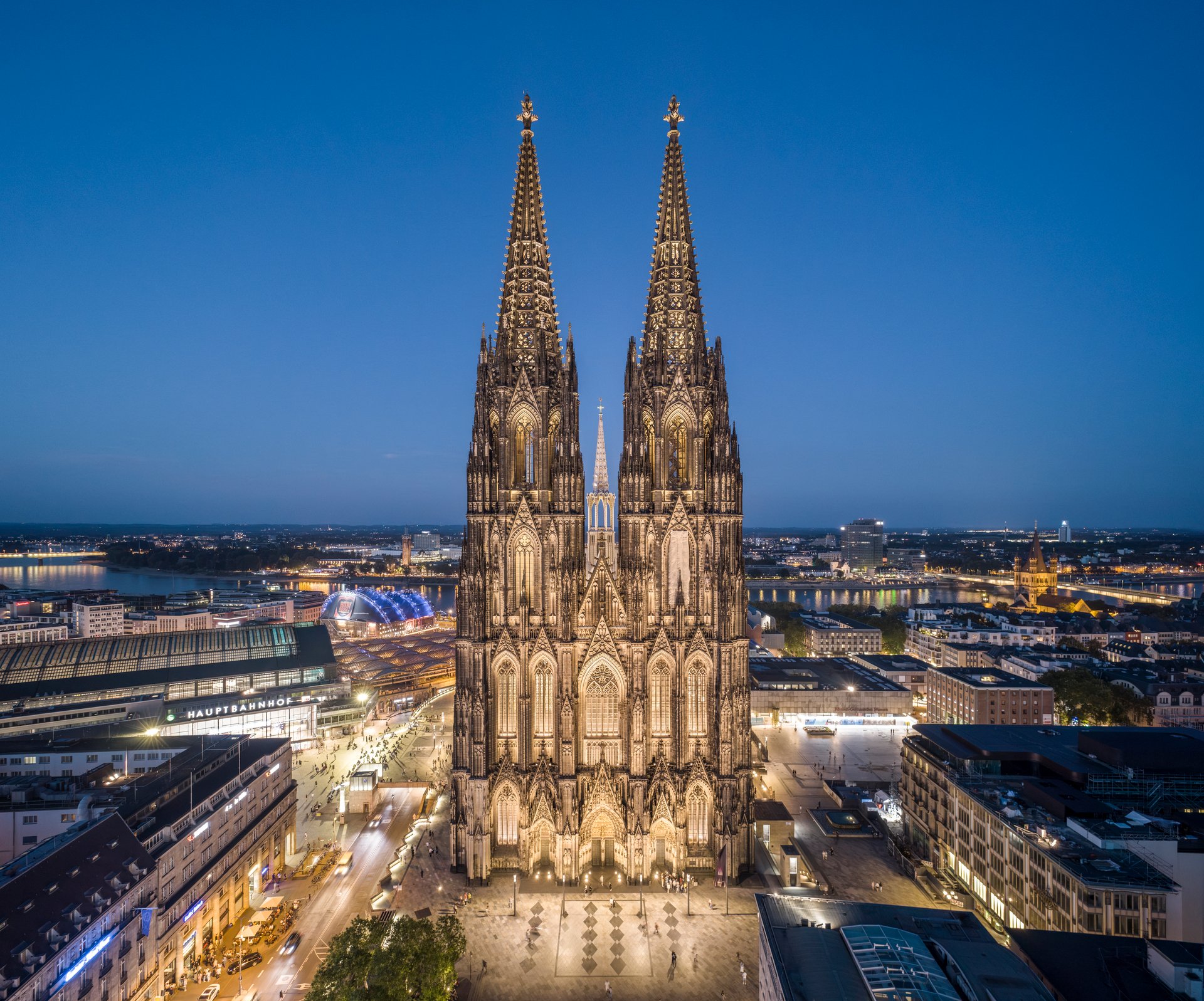
With its new LED lighting, Cologne Cathedral now has an after-dark look that presents its ornimental architecture more clearly, in greater detail and at the same time more sustainably. The finely balanced lighting concept is realised with over 700 luminaires – FLC spotlights, ETC ingrounds, and ETV / VLR linear luminaires, which have been discreetly placed on and in front of the historic building and, in their harmonious interplay, make the architectural diversity of the sacred building visible from afar. Whereas in the past around 80 per cent of the total lighting requirement was generated by luminaires installed away from the building, this figure is now only 10 per cent, which not only results in a drastic reduction in stray light, but also significantly improves the precision of the lighting. The lighting system is fully dimmable and adjustable with colour temperatures up to 2,700 K warm white.
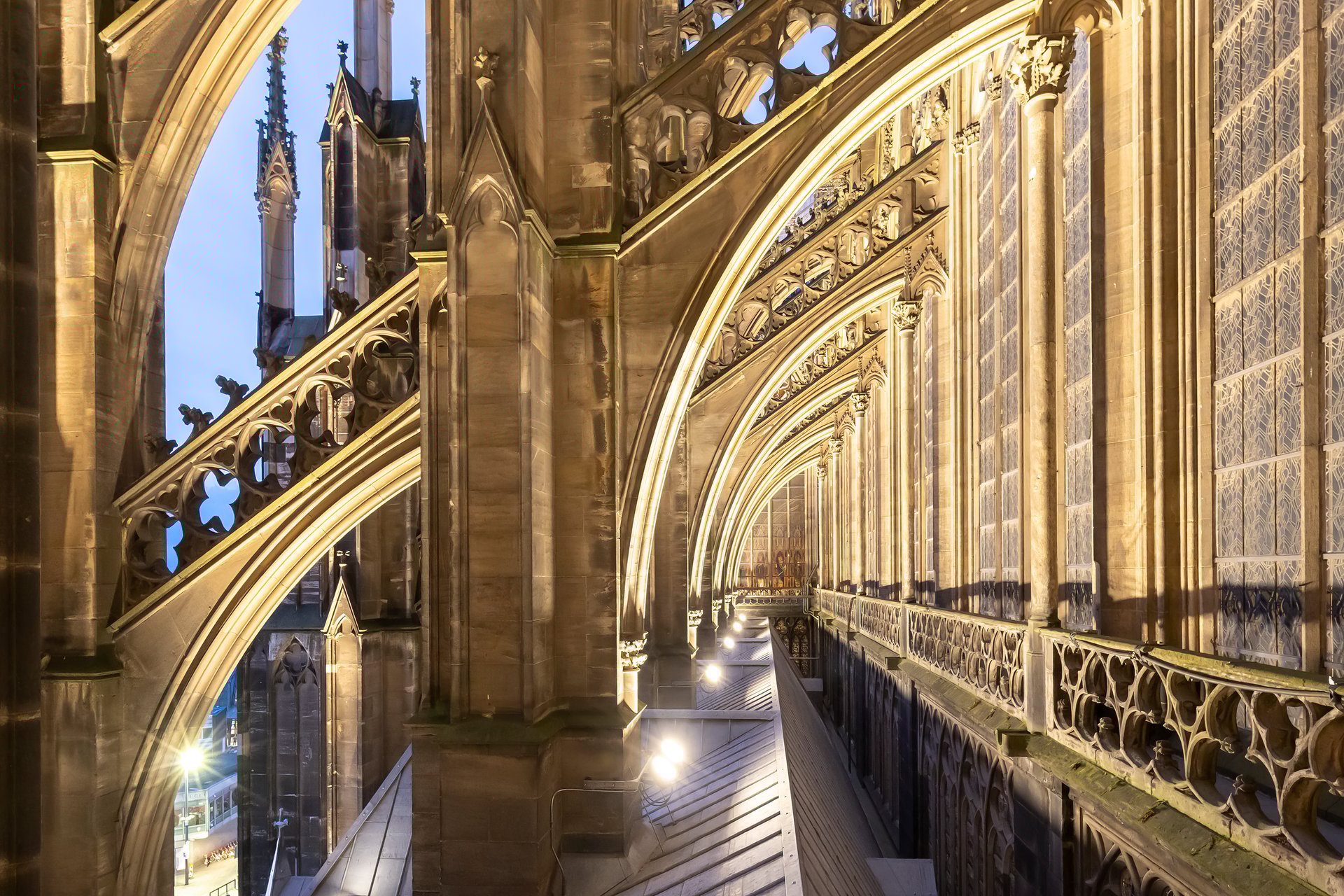
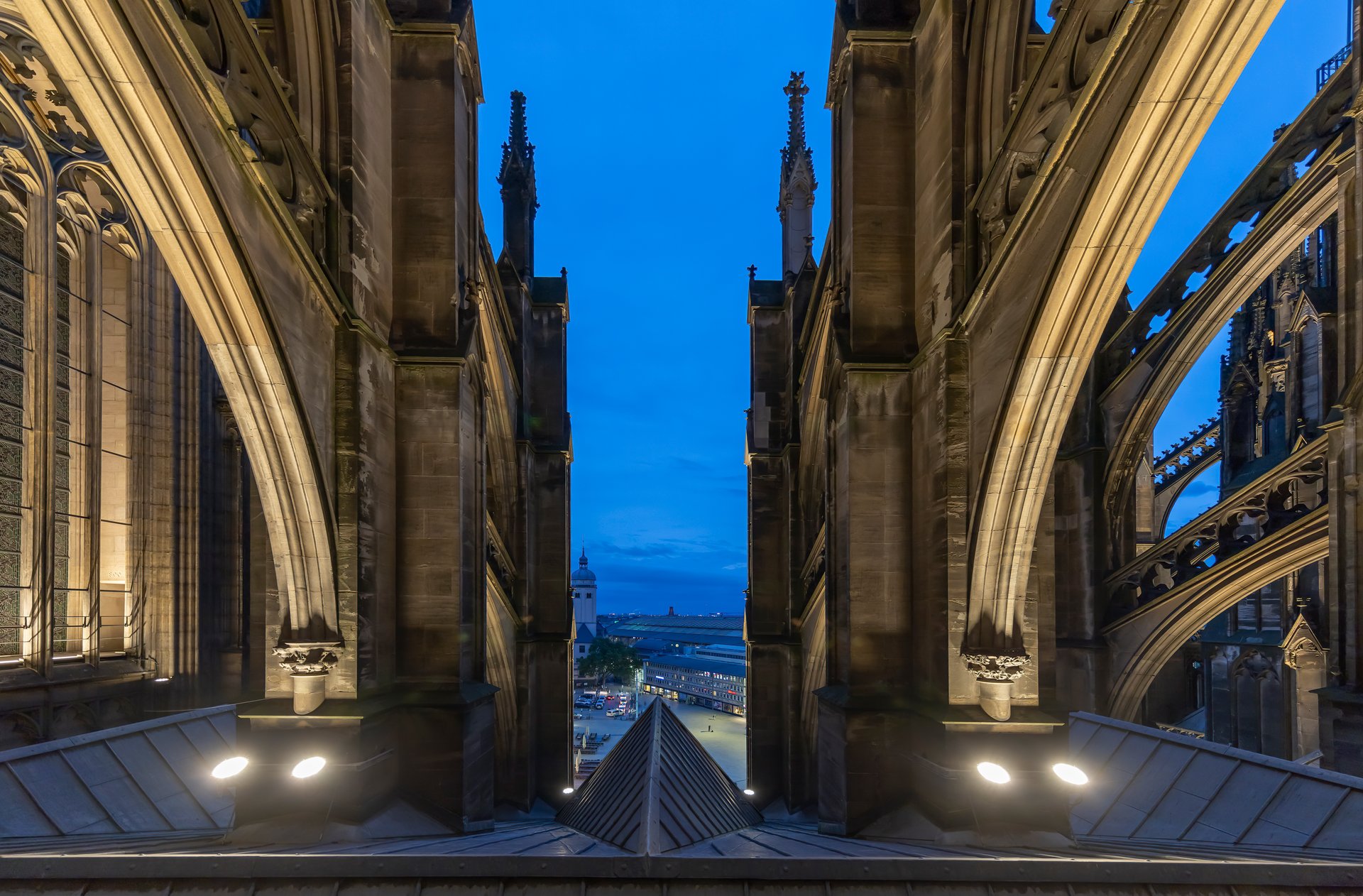
Sustainability and integration in line with heritage requirements
Cologne Cathedral is not only one of Europe's most important sacred buildings, but also a particularly sensitive heritage site. For this reason, all newly installed lighting measures are completely reversible and non-invasive. Specially developed clamping systems and load spreading brackets protect the historic fabric without drilling or interfering with the masonry. The system is designed to be flexible and energy-efficient. The energy consumption of the new lighting system has been reduced by 80 per cent – a significant improvement that underlines the ecological goals of the project while offering superior light quality. In addition, light emissions in the urban environment are significantly minimised and modern sustainability standards are met.
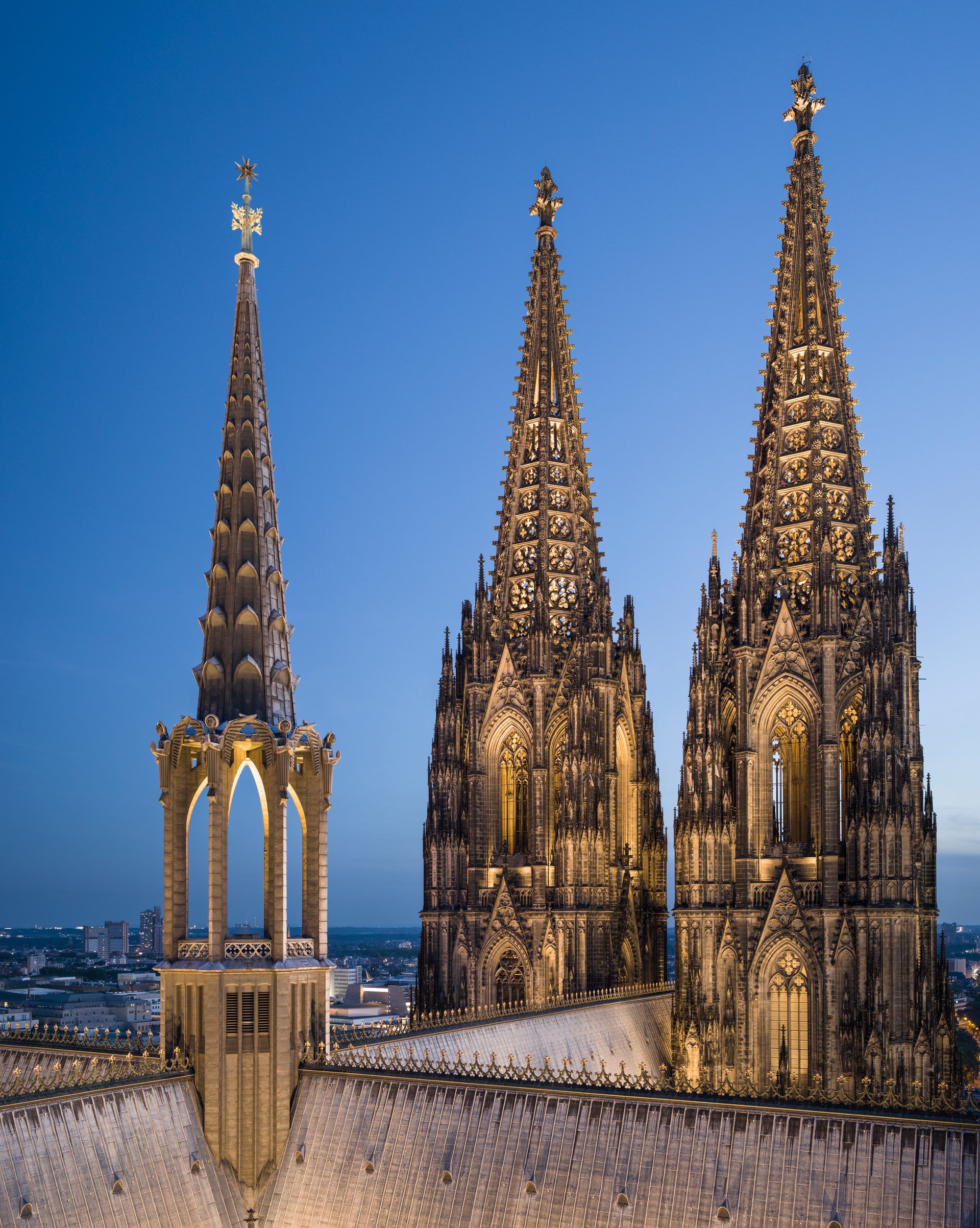
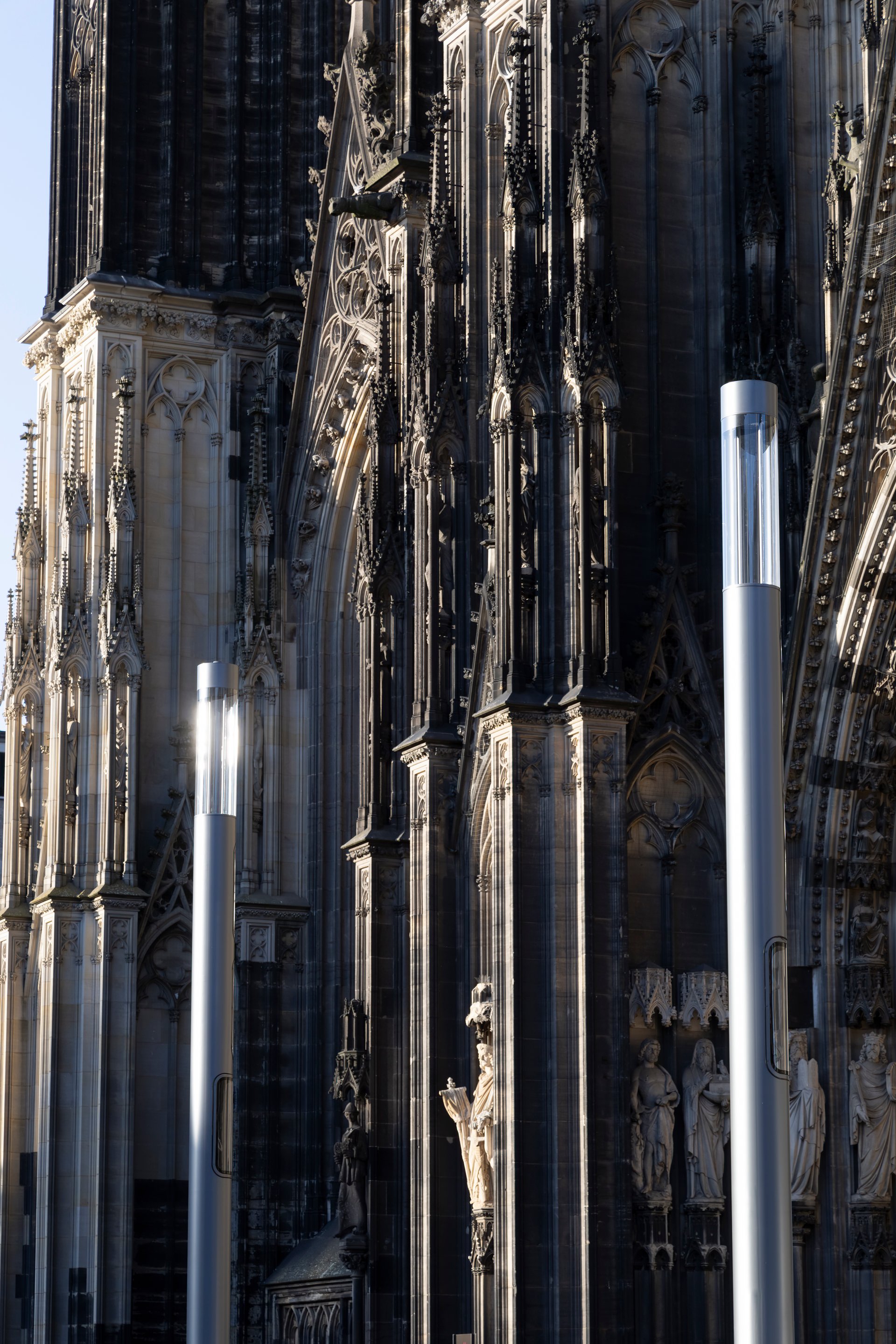
A bold after-dark transformation
Directional and grazing light accentuate the vertical dynamics and complex plasticity of the cathedral, with pinnacles, buttresses and figures appearing clearer and more spatial; the striking 157-metre-high towers are differentiated with grazing light up to the finials on the spires. An innovative element is the lighting inside the towers, whose light shines through the filigree tracery and anchors the cathedral as an immovable night light in the cityscape. The multifunctional light columns on the cathedral square also contribute to this effect. They illuminate paths and entrances and accentuate selected facade areas with integrated FLC spotlights.
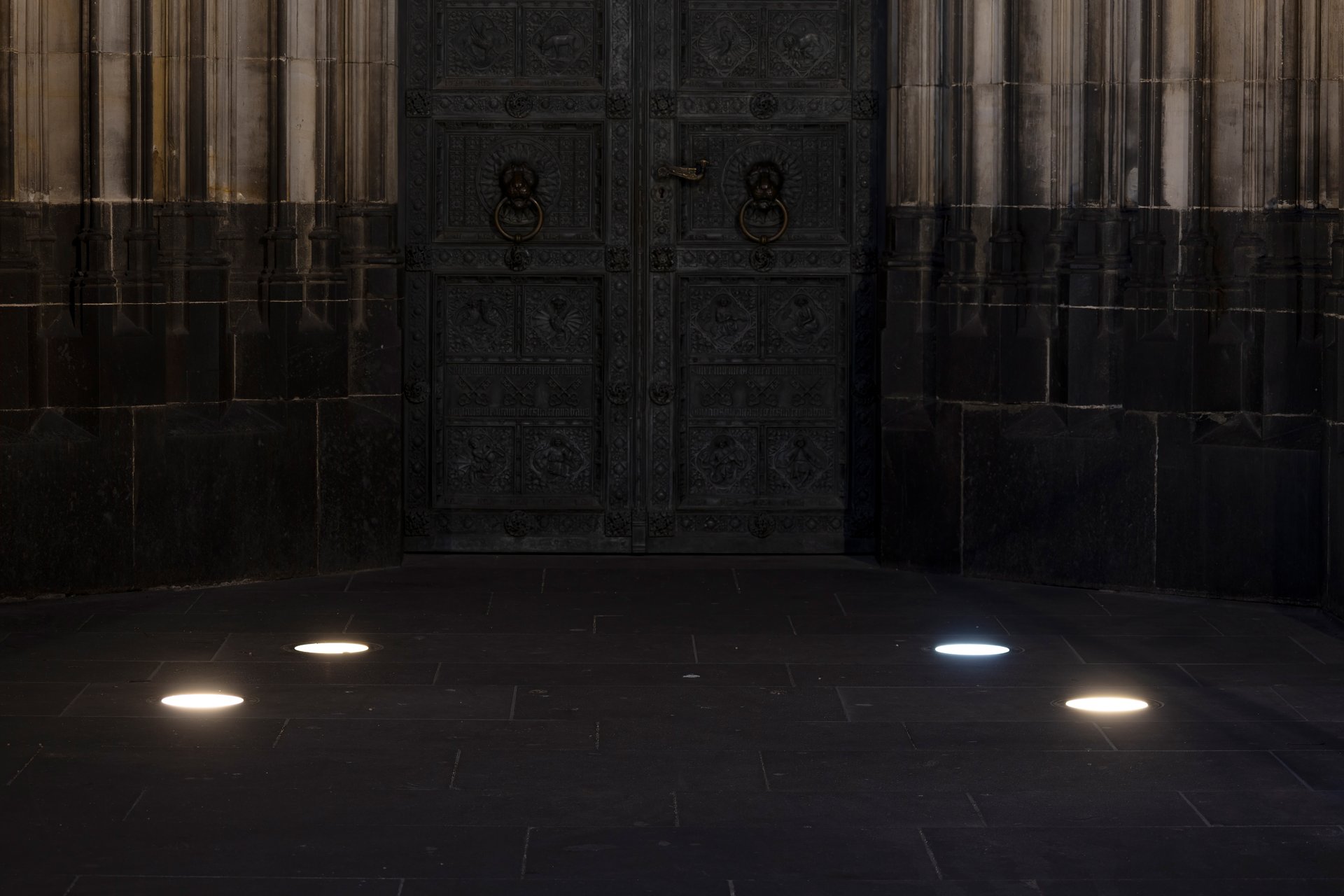
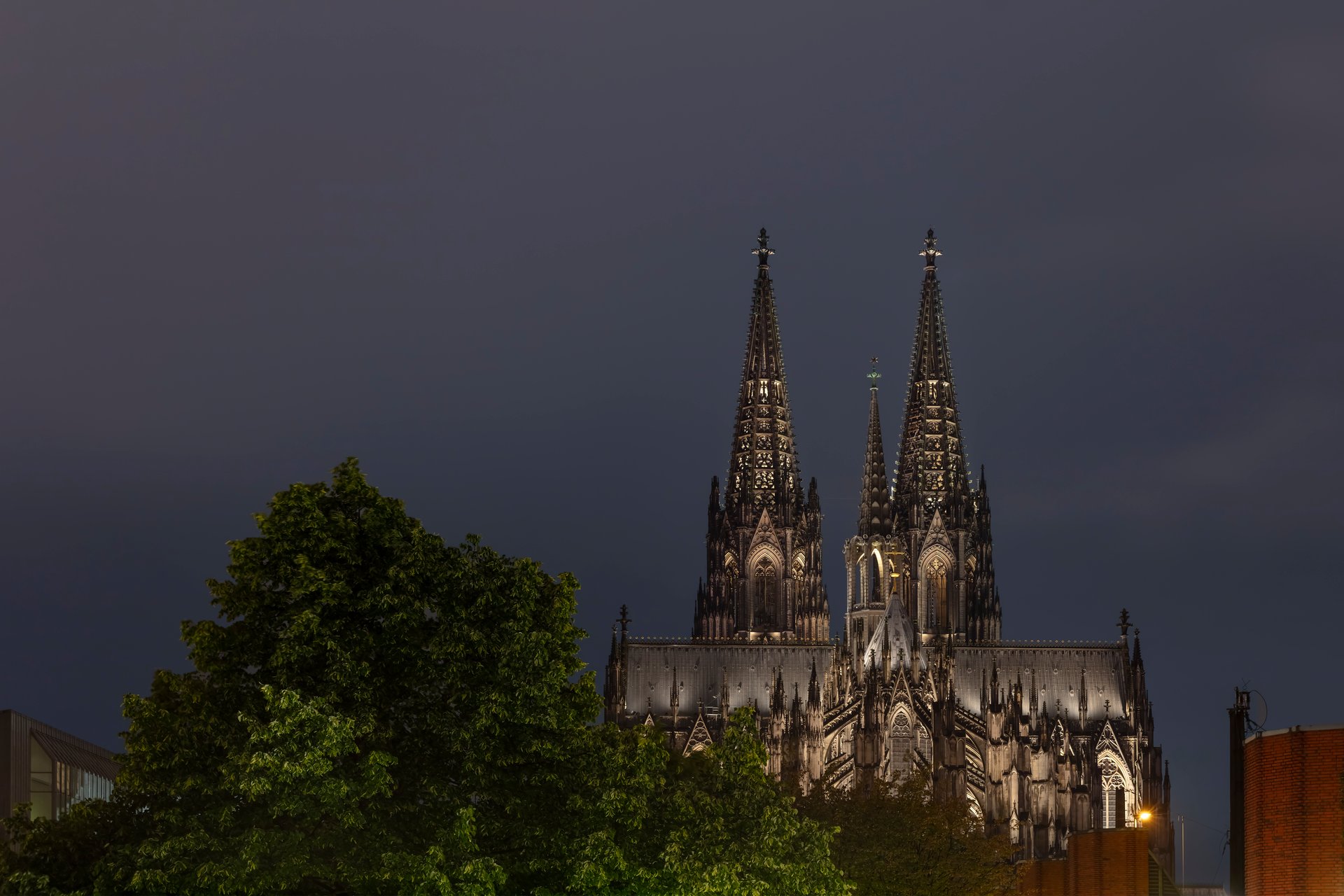
‘Cologne Cathedral is a landmark of the city and deeply rooted in its identity. Our goal was to maintain its visual presence after dark and make its architectural diversity recognisable even from a distance,’ summarises Philipp Schmitz, lighting designer and project manager at Licht Kunst Licht, adding: ‘We are proud that the finished result now makes the shape and details of the cathedral visible even from the other side of the Rhine – and gives it a sculptural, dignified night-time image that does justice to its significance.’
Credits
Project: Cologne Cathedral, Cologne, Germany Client: RheinEnergie AG on behalf of the City of Cologne Construction management: Cologne Cathedral Building Workshop, Metropolitan Chapter of the High Cathedral Church of Cologne Electrical planning: Elektro Baeth GmbH, Cologne Lighting design: Licht Kunst Licht AG Project management: Philipp Schmitz, Stephan Thiele Project team: Andreas Schulz, Thomas Möritz Completion: April 2025 Photos: Frieder Blickle for WE-EF, HGEsch Photography
Loading related products...